
Is the Pentagon about to unleash AI that makes its own decisions in war? What happens when algorithms become commanding officers—and who’s left holding accountability?
The Rise of Algorithmic Command: Hype or Imminent Reality?
The last two years have redrawn the military technology landscape. The U.S. Department of Defense is pouring unprecedented resources into Artificial Intelligence, aiming to deploy systems that operate faster than any human could. Project Maven, the Joint All-Domain Command & Control (JADC2) initiative, and scores of classified efforts signal an intent: AI-driven autonomy on the battlefield isn’t a speculative future—it’s happening now. Yet, with each layer of autonomy added to drones, cyber-defense networks, targeting systems, and logistics, a question becomes urgent: How far should human hands stay on the controls as machines make wartime life-or-death decisions?
The Allure of Autonomous Superiority
Military strategists tout AI autonomy as a solution to the tyranny of time—where victory hinges not on deliberation but on microsecond precision. Consider these projected advantages:
- Speed: AI-enabled platforms can process vast sensor data and execute maneuvers at a tempo impossible for human crews.
- Scalability: Autonomy allows single operators to coordinate swarms of drones or cyber agents across dispersed theaters.
- Survivability: Machines can perform high-risk missions without endangering human life, from EOD robots to unmanned combat air vehicles.
- Adaptive Warfare: AI systems can learn from new threats in real-time, rapidly adjusting tactics.
The Pentagon is not alone. Russia, China, and a half-dozen NATO states are racing to build self-targeting missiles, autonomous underwater vehicles, and even AI-powered command-and-control wrappers that may someday oversee human warfighters. The rationale is simple but disturbing: those who hesitate to automate will lose the technological advantage, or worse, cede decision space entirely to faster, less scrupulous adversaries.
The real battlefield is no longer just physical—it’s the shifting territory between human intent and AI execution.
The Ethical Abyss: Who’s in Command?
But at what cost comes this acceleration? A host of ethicists and senior officers are sounding the alarm. Autonomous systems, by design, increasingly operate without direct human input. Once commands are given—”Track and neutralize incoming threats” or “Maintain cyber-defensive posture”—the machine determines the fine print. But what if it misreads intent, context, or rules of engagement?
The Fragile Thread of Human Oversight
The Department of Defense has repeatedly articulated a commitment to meaningful human control: “Humans shall exercise appropriate levels of judgment over the use of force.” Yet meaningful is deliberately left vague. Human-in-the-loop, human-on-the-loop, and human-out-of-the-loop are distinctions that fade at operational tempo. In war games, even seasoned commanders have struggled to interpret or halt high-speed autonomous decision chains in real-time.
Numbers tell the story. According to recent Congressional Research Service assessments, the DoD’s AI R&D budget soared past $1.6 billion in 2023, with over 600 active AI programs. As of late 2023, more than 5,000 unmanned systems have been deployed across U.S. military branches, many with some autonomy features—while the draft DoD “AI Risk Framework” remains in limbo. (Congressional Research Service)
Escalation Risks: The Algorithmic Arms Race
As AI autonomy matures, military posturing shifts. Adversarial nations, suspicious of one another’s transparency, race to build faster and more unaccountable arsenal—mitigating perceived exposure by entrusting algorithms with catastrophic powers. The history of near-miss nuclear incidents, almost always resolved by accountable human beings, is a chilling counterpoint. AI makes no such promises.
- If an autonomous platform mistakes a friendly radar signal for an enemy threat, who takes responsibility when the missile fires?
- How do militaries audit high-velocity, high-volume battlefield decisions singularly made by black-box neural networks?
- Could a malfunctional or deceived AI ignite an international crisis before any human can intervene?
Experts at the UN and in leading think tanks fear an “autonomous action dilemma”: the more militaries invest in independence of AI action, the harder it becomes to trace back agency and responsibility—violating both international law and basic ethical intuitions.
Balancing the Equation: Tech Innovation Meets Governance
The Pentagon now finds itself at a crossroads. The twin imperatives of maintaining tactical supremacy and upholding the rule of armed conflict are colliding in the fog of algorithmic war.
Key Governance Strategies Emerging
- Auditable AI: Systems are being built with forensic logs, making autonomous decisions reviewable post-hoc—but adversarial learning and stealth AI behaviors complicate this effort.
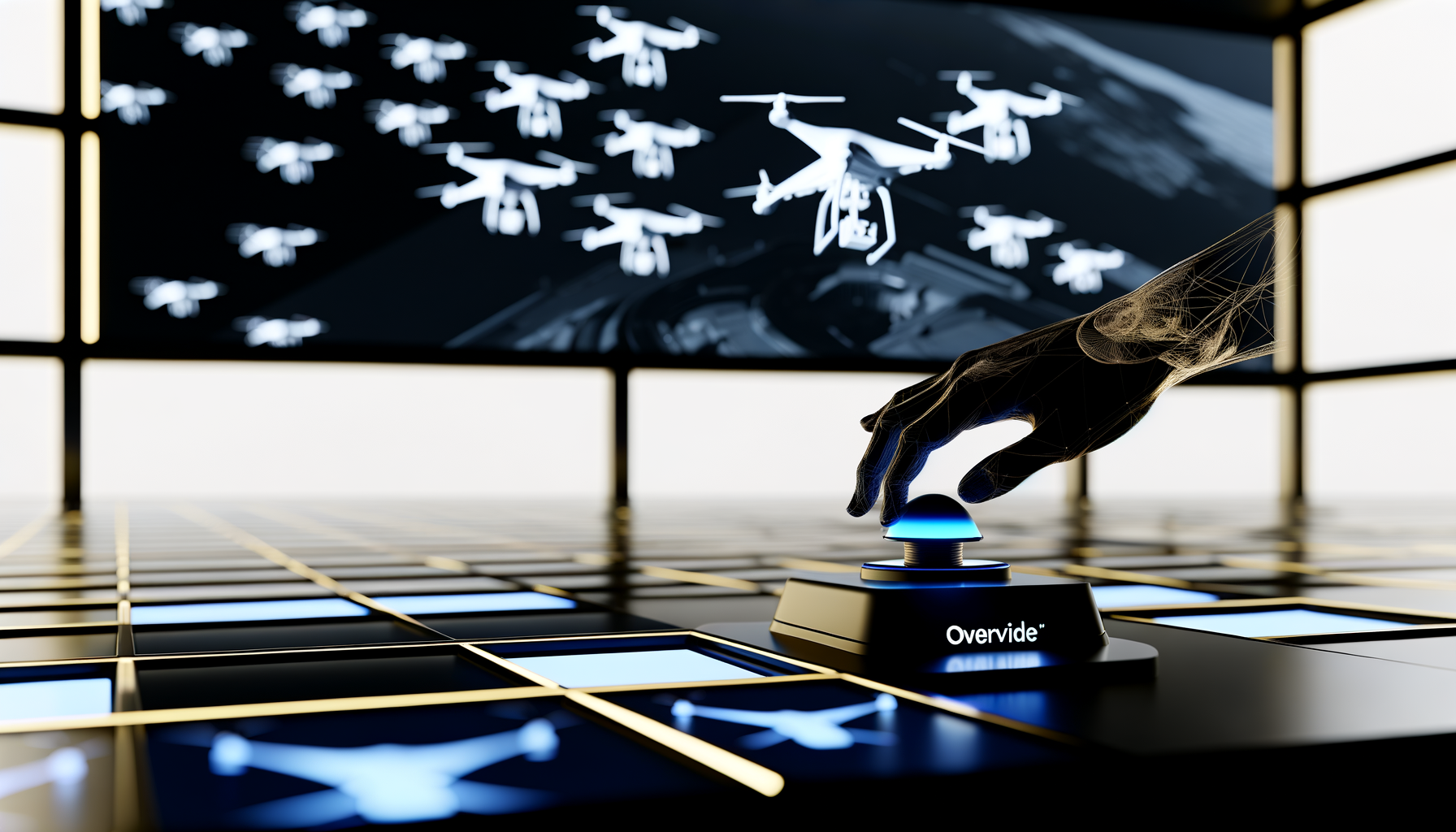
- Intervention Protocols: “Kill switches” and override options remain standard requirements, but realistic exercises show that rapid autonomous escalation often outpaces human interruption.
- Red Teaming and War Games: Wargaming with adversarial AI is now routine, testing scenarios where machines misbehave or are hacked—yet the lessons often reinforce, not reduce, pressure for more autonomy.
- International Norms: Ongoing debates at the UN on a treaty to ban lethal autonomous weapons (LAWS) face stiff resistance from major military AI powers.
Practical Case: Project Maven and “Human-On-The-Loop” Limitations
Project Maven, a flagship DoD AI effort, set out to accelerate video analysis for airstrike targeting. Human analysts were to review, not rubber-stamp, the AI’s recommendations. But internal reports indicate that as the system’s accuracy improved, analysts struggled to maintain vigilance and challenge machine assessments—a textbook example of automation bias, where reliability paradoxically erodes oversight.
The Global Stage: Allies, Adversaries, and the Pandora’s Box
One paradox of military AI is that openness—sharing standards, limits, and red lines—might actually slow the arms race. But as of mid-2024, U.S. and Chinese positions remain deeply entrenched: both sides preach responsible AI, while fielding ever more autonomous prototypes. NATO, too, remains divided; European defense ministries are more circumspect about unleashing machines with untethered authority, but face pressure from Washington to match U.S. tempo.
Without enforceable, independently verified constraints, history suggests that AI autonomy will not just proliferate but fragment: more actors, more unknowns, more risk of accidents and ill-understood escalation pathways.
The Pentagon’s greatest challenge with AI is not technological, but in answering the question no algorithm can: when is speed worth the loss of accountability?
Looking Forward: Will the Center Hold?
The calculus could not be starker. If military AI is steered by strategy and values, autonomy need not destroy human oversight. But if competition prevails above all else, the momentum toward ungoverned weapons is nearly inexorable. Responsible AI in defense is no longer a buzzword—it is the only brake on a runaway future where machines wage war on their own logic.
The world’s eyes now turn to policymakers, technologists, and commanders: can they agree on enforceable lines that autonomous military systems must not cross, or will the pace of innovation dissolve those lines before consensus is reached?
The crossroads is real: in the new AI battlefield, the true test is whether human morality can keep pace with machines it struggles to comprehend.