

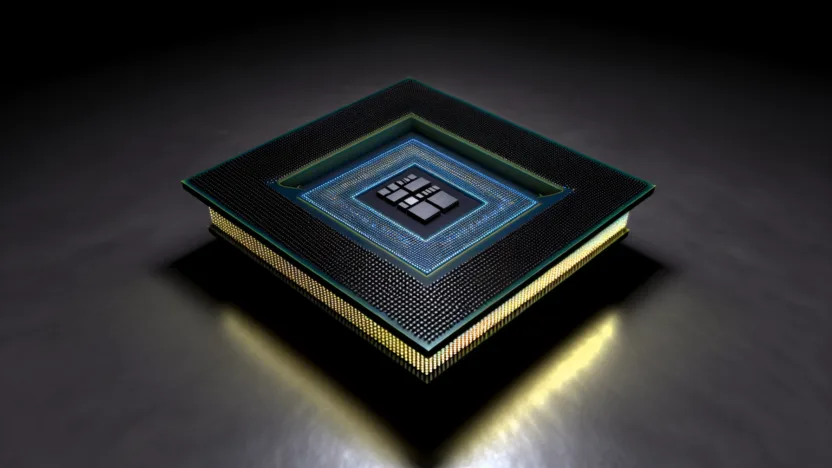
Microsoft just made running AI inference 30% cheaper—but only for Microsoft. The Maia 200 chip powers their own products first, and the economics shift differently depending on where you sit in the cloud hierarchy.
The News: Microsoft’s Second-Generation AI Silicon Goes Live
Microsoft deployed its Maia 200 AI accelerator on January 27, 2026, marking the company’s most aggressive move yet to reduce dependence on Nvidia. The chip is now operational in two data centers: Iowa (US Central) and Phoenix (US West 3).
The specifications tell a story of engineering ambition. Built on TSMC’s 3nm process, the Maia 200 packs over 140 billion transistors into an 836 mm² die—pushing against the limits of what a single reticle can accommodate. The chip delivers over 10 petaFLOPS at FP4 precision and over 5 petaFLOPS at FP8, backed by 216 GB of HBM3e memory running at approximately 7 TB/s bandwidth.
According to TechXplore’s coverage, Microsoft claims the Maia 200 delivers 30% better performance per dollar than its previous inference hardware. More aggressively, the company states it achieves 3× the FP4 performance of Amazon’s third-generation Trainium and outperforms Google’s seventh-generation TPU on FP8 workloads.
The chip’s 750W thermal design power requires liquid cooling, delivered through TSMC’s advanced CoWoS-S packaging. This isn’t a drop-in replacement for existing infrastructure—it demands purpose-built racks and cooling systems that Microsoft has spent years developing.
Why This Matters: The Vertical Integration Play
The Maia 200 deployment represents something more significant than a faster chip: it’s Microsoft completing a vertical integration stack that didn’t exist three years ago.
The immediate beneficiary is Microsoft itself. The chip powers Microsoft 365 Copilot, GPT-5.2 inference, the Microsoft Foundry AI platform, and internal workloads from Microsoft’s Superintelligence team. Every prompt processed through these services now runs on hardware that Microsoft designed, deployed, and controls.
The Next Platform reports that Microsoft positions this as competitive pressure against other hyperscalers, but the short-term picture is simpler: Microsoft reduces its own operating costs while competitors continue paying Nvidia’s margins.
For Azure customers, the 30% cost reduction flows downstream gradually, not immediately. Microsoft’s internal workloads get priority. External customers running GPT-5.2 inference through Azure OpenAI Service will eventually see better pricing as Maia 200 capacity scales, but that’s measured in quarters, not days.
The competitive dynamics split three ways:
- Microsoft wins by improving margins on Copilot products and Azure AI services, reducing Nvidia dependency, and gaining negotiating leverage for future GPU purchases.
- Amazon and Google face pressure to demonstrate comparable performance from Trainium and TPU respectively—claims that Microsoft is now directly challenging with specific benchmarks.
- Nvidia loses volume at the hyperscaler level but maintains 80% market share because enterprises, startups, and mid-market cloud customers still have no alternative path to competitive inference performance.
Technical Architecture: What Makes Maia 200 Different
Understanding the Maia 200 requires examining what Microsoft optimized for—and what they deliberately traded away.
Die Architecture and Memory Hierarchy
The 836 mm² die size approaches the maximum size manufacturable on a single lithographic exposure (the “reticle limit”). Going larger requires chiplet designs with inter-die communication overhead. Microsoft chose maximum single-die performance over modular scaling, betting that inference workloads benefit more from unified memory coherence than distributed compute.
The 272 MB of on-die SRAM cache is the standout specification. For context, Nvidia’s H100 includes 50 MB of L2 cache. Maia 200’s 5× larger cache fundamentally changes how attention mechanisms work in transformer inference.
When running a large language model, the KV-cache (key-value cache storing attention states from previous tokens) often becomes the memory bandwidth bottleneck. More on-die SRAM means more of this cache stays close to compute cores, reducing trips to HBM3e. At 7 TB/s HBM bandwidth, external memory is fast—but on-die SRAM runs at roughly 50× the effective bandwidth with orders of magnitude lower latency.
The 272 MB SRAM bet only pays off for inference. Training workloads need to move massive activation tensors between forward and backward passes, favoring raw memory capacity over cache size. Microsoft built the Maia 200 for a specific workload profile: serving pre-trained models to millions of concurrent users.
Precision Choices: FP4 and FP8
The >10 petaFLOPS FP4 number deserves scrutiny. Four-bit floating point is aggressive quantization—it works for many inference workloads but introduces accuracy degradation that varies by model architecture and task type.
Microsoft’s claim of 3× FP4 performance versus Amazon’s Trainium 3 assumes both chips running at their stated FP4 rates on comparable workloads. Real-world performance depends heavily on quantization-aware training, model-specific optimizations, and the actual precision required for acceptable output quality.
The >5 petaFLOPS FP8 specification offers a more apples-to-apples comparison point. FP8 inference has become the de facto standard for production LLM serving, balancing accuracy preservation with computational efficiency. Microsoft’s claim of outperforming Google’s TPU v7 on FP8 workloads—if accurate under neutral benchmarking—positions Maia 200 competitively against the best custom silicon in the industry.
Power and Cooling Trade-offs
The 750W TDP is substantial but not exceptional for this performance class. Nvidia’s B200 runs at 1000W. AMD’s MI300X operates at 750W. The meaningful comparison is performance per watt, where Microsoft’s 30% better performance per dollar claim indirectly suggests competitive efficiency.
Liquid cooling dependency limits deployment flexibility. These aren’t chips you can retrofit into existing air-cooled data center rows. Microsoft built new infrastructure in Iowa and Phoenix specifically for Maia 200, with purpose-designed cooling loops and power delivery systems. The capital investment suggests confidence in sustained deployment, not a proof-of-concept experiment.
The Contrarian Take: What the Coverage Gets Wrong
Most reporting frames Maia 200 as “Microsoft takes on Nvidia.” This misunderstands what’s actually happening.
Microsoft isn’t trying to replace Nvidia—they’re trying to not need them for specific workloads. The Maia 200 runs inference. Nvidia still dominates training. Microsoft still buys Nvidia GPUs by the shipload for training GPT-5.2 and future models. The Maia 200 reduces marginal costs once models are trained and deployed, but the Nvidia dependency remains upstream.
The 30% cost reduction claim also requires context. Economic Times reports this as performance per dollar versus Microsoft’s previous inference hardware—not versus Nvidia’s current generation. The comparison baseline is Microsoft’s own first-generation Maia and whatever Nvidia hardware they were previously using for inference. Against Nvidia’s newest silicon, the picture is more nuanced.
The Overhyped Element
Coverage suggesting this changes the cloud competitive landscape within 2026 underestimates deployment timelines. Two data centers in Iowa and Phoenix serve Microsoft’s internal workloads first. Scaling to meaningful Azure customer capacity takes additional fabrication runs, data center buildouts, and software optimization cycles.
TSMC’s 3nm capacity is constrained. Apple, AMD, Nvidia, and now Microsoft all compete for wafer allocations. Microsoft can’t simply order “more Maia 200s” and have them arrive next quarter. The fab scheduling was locked months ago, and meaningful capacity expansion requires planning cycles measured in years.
The Underhyped Element
What’s underappreciated is Microsoft’s software stack advantage. Custom silicon only delivers value when software can fully utilize it. Microsoft controls PyTorch integration, ONNX Runtime, and the Azure Machine Learning infrastructure. They can optimize the entire stack from model training (ensuring quantization-friendly weights) through serving (custom kernels for Maia 200 architecture).
This vertical integration mirrors what Apple achieved with M-series silicon: hardware-software co-design that competitors can’t easily replicate. Google has this with TPUs and JAX. Amazon is building it with Trainium and Neuron. But Microsoft’s integration with the GPT model family—used by Azure’s largest AI customers—creates unique optimization opportunities.
The real competitive moat isn’t the chip—it’s the models optimized specifically for the chip. GPT-5.2 running on Maia 200 benefits from training-time decisions that assumed Maia 200 deployment. Competitors can’t simply run their models on Maia 200; they’d need to retrain or fine-tune with Maia 200’s architectural quirks in mind.
Practical Implications: What This Means for Your Architecture Decisions
If you’re building AI-powered applications in 2026, the Maia 200 deployment changes your decision matrix in specific ways.
If You’re Running on Azure
Continue prioritizing Azure OpenAI Service for GPT-family model inference. The 30% efficiency improvement flows to you through eventual pricing adjustments and improved latency characteristics. Don’t expect immediate price cuts—Microsoft will capture margin improvement first—but budget planning for H2 2026 can reasonably assume better inference economics.
Monitor Azure’s inference latency benchmarks over the coming months. Maia 200’s large SRAM cache should reduce P99 latencies for long-context workloads. If your application is sensitive to tail latency (real-time voice, interactive agents), track whether Azure performance improves relative to alternatives.
If You’re Multi-Cloud or Cloud-Agnostic
The hyperscaler custom silicon race creates both opportunity and risk. Opportunity: competitive pressure between Microsoft, Google, and Amazon drives down inference costs across all platforms. Risk: model optimization becomes increasingly platform-specific.
Running a Llama-based model on Maia 200 won’t capture the same efficiency gains as GPT models purpose-trained for the hardware. This tilts the build-versus-buy decision further toward using platform-native model APIs rather than self-hosting open-weights models.
If you’re self-hosting inference on Nvidia GPUs today, the economic math just shifted. Microsoft’s managed inference services—already cheaper than running your own H100s when factoring total cost of ownership—now have another 30% cost advantage working in their favor. Re-run your unit economics calculations with current Azure pricing before assuming self-hosting remains optimal.
If You’re at Startup Scale
The Maia 200 deployment is irrelevant to your immediate decisions but critical to your strategic planning. Custom silicon only benefits applications running at scale. Microsoft’s internal workloads (Copilot, Bing, Office) justify billion-dollar chip development. Your 10,000-user application doesn’t.
The practical takeaway: bet on managed inference services rather than building infrastructure expertise that becomes obsolete as hyperscalers deploy custom silicon. The competitive advantage for startups lies in applications, data, and user experience—not in squeezing 15% better inference performance from your GPU cluster.
Sample Architecture Considerations
For production LLM applications, consider this decision tree:
- Latency-critical, high-volume inference: Azure OpenAI Service or equivalent managed API. Let Microsoft’s silicon investment benefit you without capital expenditure.
- Cost-sensitive batch processing: Spot instance GPU clusters remain competitive for non-real-time workloads. Maia 200 optimization targets interactive inference, not throughput-optimized batch.
- Privacy-constrained workloads: Self-hosted inference on rented or owned GPUs. Maia 200 availability in Azure customer-accessible form remains TBD.
- Multi-modal or emerging model architectures: Nvidia maintains flexibility advantages. Maia 200 is optimized for transformer inference; novel architectures may not map well to its fixed-function units.
Forward Look: Where This Leads
The Maia 200 deployment establishes a pattern that accelerates over the next 12-18 months.
Q2-Q3 2026: Capacity Scaling
Microsoft expands Maia 200 deployment to additional data centers, likely prioritizing US East and Western European regions. Internal workloads continue absorbing initial capacity, with limited availability for external Azure customers.
Amazon and Google respond with competitive benchmark claims. Expect a technical marketing battle over FP4/FP8 performance metrics, likely with enough methodology differences that no clear winner emerges. The real competition happens in pricing and customer workload migration.
Q4 2026: Azure AI Infrastructure Updates
Microsoft likely introduces Maia 200-backed SKUs for Azure Machine Learning inference endpoints. Pricing positioned to undercut Nvidia-based alternatives by 15-25%, capturing the remaining efficiency margin after Microsoft takes its share.
The model ecosystem fragments further. Models trained and optimized for Maia 200 won’t run optimally on TPU or Trainium, and vice versa. Platform lock-in increases, but so does performance for committed customers.
2027: Third-Generation Silicon Race
TSMC’s 2nm process enters production, and Microsoft, Google, and Amazon all have next-generation designs in development. The pace of custom silicon iteration accelerates to 18-month cycles, approaching Nvidia’s historical cadence.
The strategic question for enterprises becomes: do you commit to a single cloud’s AI infrastructure stack, or pay a complexity premium for multi-cloud flexibility? There’s no universally correct answer—it depends on your scale, risk tolerance, and competitive dynamics.
What The Numbers Actually Mean
Let’s ground the Maia 200 specifications in practical terms.
Over 10 petaFLOPS at FP4 means approximately 10,000 trillion operations per second at 4-bit precision. For a 100-billion-parameter model quantized to FP4, this translates to roughly 100 forward passes per second per chip—before accounting for memory bandwidth constraints. Real-world throughput depends on model architecture, batch size, and sequence length, but the order of magnitude is “hundreds of concurrent users per chip for interactive inference.”
The 216 GB HBM3e capacity matters for model size. A 100-billion-parameter model at FP8 requires approximately 100 GB of memory (1 byte per parameter). Maia 200 can hold the model plus substantial KV-cache headroom for long-context workloads. Models above roughly 200 billion parameters require multi-chip configurations.
The 7 TB/s memory bandwidth, combined with 272 MB SRAM, suggests an architectural bet on memory-bound workloads. Transformer inference spends more time moving data than computing on it. Microsoft’s design prioritizes data locality over raw compute density—a reasonable trade-off for serving pre-trained models but limiting for compute-bound alternatives.
The Broader Industry Implication
The Maia 200 deployment crystallizes a structural shift that’s been building since 2023: inference economics now diverge from training economics.
Training remains Nvidia’s stronghold. The H100/H200/B200 progression optimizes for high-bandwidth GPU-to-GPU communication, mixed-precision matrix operations at scale, and software ecosystem compatibility. Nothing in the Maia 200 design challenges this position.
Inference is fragmenting. Different deployment scenarios—real-time interactive, batch processing, edge deployment, privacy-constrained—favor different hardware architectures. Maia 200 optimizes for one high-value scenario (hyperscale interactive inference for transformer models) and deliberately ignores others.
The company that controls the inference layer controls the margin on AI applications. Training is a one-time cost; inference scales with usage.
Microsoft’s Maia 200 bet is fundamentally about capturing inference margin as AI applications move from experimental to production-critical. They’re accepting Nvidia’s training hegemony while building independence where recurring revenue lives.
For CTOs evaluating AI infrastructure strategy, this means tracking inference costs separately from training costs, assuming inference economics improve faster than training economics, and positioning architectures to benefit from hyperscaler competition without depending on specific hardware generations.
The 30% cost reduction Microsoft claims today becomes the baseline everyone else must match tomorrow—and the competitive pressure benefits every AI application running on cloud infrastructure, regardless of which hyperscaler you choose.