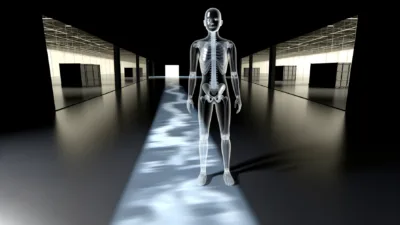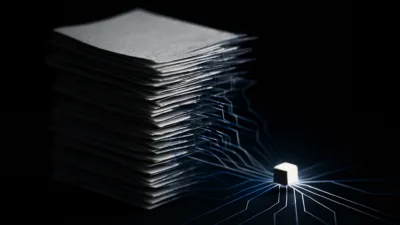

Figure AI just mass-deleted over 100,000 lines of carefully engineered robotics code. A 10-million-parameter neural network now does the job better.
The News: Full-Body Autonomy in One Neural Architecture
On January 27, 2026, Figure AI announced Helix 02, the first humanoid robot system to unify walking, balance, and manipulation under a single neural controller. The company calls it “System 0″—a whole-body motion prior that replaces what was previously 109,504 lines of hand-engineered C++ with a 10-million-parameter network running at 1,000 Hz.
The flagship demonstration: a Figure 03 robot loads and unloads a dishwasher in 4 continuous minutes, executing 61 sequential manipulation actions without a single reset or human intervention. No teleoperator. No scripted motions. No fallback to classical control.
This is the longest autonomous task ever demonstrated by a humanoid robot. And it’s not close.
The underlying training regime explains how they got there: over 1,000 hours of human motion data, retargeted at the joint level and amplified across more than 200,000 parallel simulation environments. The result is a robot that doesn’t execute programmed movements—it generates human-like motion patterns in real-time.
Why It Matters: The Death of Hand-Engineering in Physical AI
For decades, robotics meant carefully tuned PID controllers, inverse kinematics solvers, motion planners, and state machines. Each behavior required explicit programming. Each environment demanded recalibration. The 109,504 lines of C++ that Helix 02 replaced weren’t legacy code—they represented the accumulated expertise of robotics engineers solving balance, gait generation, and coordinated manipulation one edge case at a time.
That approach has a ceiling. Every new task requires new engineering. Every new environment requires new tuning. The marginal cost of capability never decreases.
Helix 02 inverts the economics. Once you have a general-purpose motion prior trained on how humans actually move, adding new capabilities becomes a matter of training data, not engineering time. The robot already “knows” how bodies work.
According to technical breakdowns, Figure AI’s architecture separates concerns into three systems: System 0 handles the motion prior (whole-body coordination), System 1 runs sensor-to-action visuomotor policies (processing all sensors to all actuators), and System 2 manages high-level reasoning and planning. This means the 10-million-parameter network isn’t doing everything—it’s doing the hard part that previously required the most hand-tuning.
The winners here are obvious: companies building on top of humanoid platforms. If the base layer of physical control becomes learned rather than engineered, application developers can focus on task-level intelligence rather than motor control primitives.
The losers are less obvious: traditional robotics firms with decades of proprietary control software. That intellectual property just became technical debt.
Technical Depth: Inside the System 0 Architecture
The Hardware Foundation
Helix 02 runs on Figure 03 hardware, which matters for understanding what the neural network actually controls. The specs: 35 degrees of freedom in the main body, 16 degrees of freedom in each five-fingered hand, 6 RGB cameras, tactile fingertip sensors, palm cameras, and 2 onboard GPUs delivering 3× the compute of the previous model. The robot carries loads up to 25 kg (55 lb).
At 1,000 Hz, the System 0 controller sends 1,000 commands per second to every actuator. This frequency matters. Human reflexive responses operate at roughly 50-100 ms latency. A 1 kHz loop gives the robot 10-20 decision cycles per human reaction time—enough headroom for smooth, anticipatory control rather than reactive correction.
Training at Scale
The 1,000+ hours of human motion data underwent joint-level retargeting, meaning Figure AI didn’t just capture gross movements—they mapped human joint angles, velocities, and accelerations onto the robot’s specific kinematic structure. This is harder than it sounds. Human shoulders and robot shoulders don’t work the same way. Human fingers have 27 degrees of freedom; Figure 03’s hands have 16. Every motion must be translated, not just copied.
The 200,000+ parallel simulation environments served two purposes: data augmentation and domain randomization. By training across massive environmental variation—different surfaces, different object weights, different disturbances—the network learns policies that transfer to the real world without extensive fine-tuning. This is the same sim-to-real playbook that worked for OpenAI’s robot hand in 2019, but applied to full-body humanoid control.
The Three-System Hierarchy
System 0, System 1, and System 2 map roughly to reflexes, perception-action loops, and cognition:
- System 0 (Motion Prior): 10M parameters, 1 kHz. Handles balance, gait, whole-body coordination. Think of it as the cerebellum—it knows how to move a body without thinking about why.
- System 1 (Visuomotor Policy): Processes all sensor inputs (6 cameras, tactile sensors, proprioception) and outputs to all actuators. This is where task-specific learning happens—how to grasp a plate, how to orient a cup, how to avoid collisions.
- System 2 (Planning/Reasoning): High-level task decomposition and sequencing. Figures out that “load the dishwasher” means this sequence of 61 actions in this order.
The architectural insight is that System 0 provides a stable foundation for System 1 and System 2 to build on. Previous approaches tried to learn everything end-to-end, which required enormous data and still produced brittle behaviors. By factoring out the motion prior, Figure AI can train task-specific policies faster and with less data.
Dexterity Demonstrations
Beyond the dishwasher task, Figure AI demonstrated fine manipulation capabilities that push the boundaries of what’s been shown publicly: extracting individual pills from containers, dispensing precise syringe volumes, and singulating small irregular objects from clutter. These tasks require sub-centimeter precision, real-time tactile feedback, and the kind of coordinated finger movements that have historically defeated robotic grippers.
The palm cameras are the underappreciated piece here. Most robot hands are functionally blind during grasping—they close until contact. Palm cameras give Figure 03 visual feedback throughout the grasp, enabling closed-loop manipulation rather than open-loop commands.
The Contrarian Take: What the Coverage Gets Wrong
The Overhyped Part
Most reporting frames this as “neural networks replace traditional robotics.” That’s a category error. Neural networks didn’t replace physics—they replaced the manual encoding of physics knowledge. The robot still obeys Newton’s laws. It still has joint limits and torque constraints. What changed is how the controller learns to work within those constraints.
The 109,504 lines of C++ weren’t wrong. They represented genuine solutions to real problems. The issue was that human engineers had to discover and encode those solutions manually. The neural network discovers equivalent (or better) solutions automatically from data.
Also overhyped: the implication that 10 million parameters is somehow small. It’s small for language models. It’s large for a real-time motor controller. Running 10M parameters at 1 kHz on embedded hardware is a genuine engineering achievement, not a limitation.
The Underhyped Part
What’s getting insufficient attention is the training data infrastructure. One thousand hours of joint-level retargeted human motion across 200,000 parallel environments represents a massive investment in data pipelines, simulation infrastructure, and motion capture processing. This is the moat.
The model architecture matters less than the data flywheel. Figure AI now has infrastructure for generating high-quality humanoid training data at scale. Every deployment teaches them more about human environments. Every demonstration produces new training signal. Competitors can copy the architecture. They can’t copy 18 months of data accumulation.
The other underhyped element: Figure 02 is already deployed at BMW manufacturing facilities. This isn’t a research demo—it’s a product with paying customers. The dishwasher task is impressive, but the company is generating real revenue while iterating.
What’s Genuinely New
Previous humanoid demonstrations fell into two categories: choreographed routines (impressive but scripted) or single-skill demonstrations (bipedal walking OR manipulation, never integrated). Helix 02 is the first system to show extended autonomous operation combining locomotion and manipulation without task-specific engineering for each transition.
The 61-action sequence includes moments where the robot must adjust its stance while reaching, recover balance while carrying, and transition between locomotion and manipulation modes. These transitions were previously solved by manual finite-state machines. System 0 handles them implicitly as part of the learned motion prior.
Practical Implications: What This Means for Your Roadmap
If You’re Building Robotics Applications
The era of treating robot control as a solved subproblem is arriving. Within 2-3 years, expect humanoid platforms to offer “motion as a service”—you specify task-level objectives, the platform handles the physics.
Start designing applications assuming capable manipulation exists. The bottleneck shifts from “can the robot do this motion” to “do we have the sensor data and task understanding to specify what we want.”
Prioritize data collection infrastructure now. The companies that win will be the ones with high-quality datasets of task demonstrations in their specific domains. Figure AI proved the approach works; your competitive advantage comes from applying it to your use cases.
If You’re Building Foundation Models
Helix 02 validates the hierarchical approach: specialized lower-level models handling real-time control, general-purpose higher-level models handling reasoning. This architecture likely transfers to other embodied AI domains—autonomous vehicles, industrial automation, surgical robotics.
The 10M-parameter sweet spot for real-time motor control is a data point worth noting. Larger isn’t always better when you’re constrained to 1 kHz inference on embedded hardware. Model architecture search for real-time physical control is an underexplored area.
If You’re Evaluating Vendors
Watch deployment numbers, not demo videos. Figure AI’s BMW deployment means they’re solving the unglamorous problems: reliability, maintainability, safety certification, fleet management. Competitors showing only research demos are 18-24 months behind on these operational fundamentals.
The $1 billion raise at $39 billion valuation tells you the capital markets expect humanoid robotics to become a major platform. Microsoft, OpenAI, and Nvidia don’t write checks that size for science projects. They’re positioning for an ecosystem.
If You’re Running a Robotics Team
The skills that matter are shifting. Classical control theory expertise remains valuable but is no longer the core differentiator. The critical hires now are:
- ML infrastructure engineers who can build simulation pipelines at scale
- Motion capture and retargeting specialists
- Sim-to-real transfer experts
- Engineers who understand both neural network training and real-time embedded systems
The pure roboticists who scoff at learning-based approaches will find themselves maintaining legacy systems rather than building new capabilities.
The Hardware Question: Why Figure 03 Matters
Software advances require hardware that can execute them. Figure 03’s spec sheet reveals deliberate design choices optimizing for learned control:
The 35 DOF main body exceeds what’s strictly necessary for most tasks. Extra degrees of freedom provide redundancy—multiple ways to achieve the same end-effector position. Learned controllers exploit this redundancy for balance and obstacle avoidance in ways that would be computationally intractable for classical planners.
The 16 DOF hands strike a balance between capability and complexity. Human hands have more freedom, but not all of it is necessary for manipulation. Figure AI chose enough articulation for dexterous tasks without the learning complexity of full anthropomorphism.
The 6 RGB cameras plus palm cameras provide the perceptual coverage that learning-based manipulation requires. Classical approaches often assumed sparse sensing because processing was expensive. Neural policies trained end-to-end on visual input can exploit dense camera coverage that would overwhelm hand-designed algorithms.
The 2 onboard GPUs represent a commitment to onboard inference. Running System 0 at 1 kHz leaves no room for cloud round-trips. Edge AI isn’t optional for real-time physical control—it’s mandatory.
Competitive Landscape: Who’s Positioned to Respond
Tesla’s Optimus program has been notably quiet since 2024, with demonstrations that remain heavily scripted. Boston Dynamics has superior locomotion capabilities but has shown limited progress on general manipulation. Agility Robotics’ Digit is focused on logistics rather than general-purpose autonomy.
The surprise competitors may come from Chinese manufacturers. With lower hardware costs and aggressive government backing, companies like Unitree and Fourier Intelligence could potentially license or replicate learned control approaches more quickly than Western firms expect.
However, the real competition isn’t between humanoid robot companies—it’s between humanoid robots and specialized automation. A general-purpose humanoid remains more expensive than purpose-built solutions for any single task. Figure AI’s bet is that versatility reduces total cost of ownership for facilities with diverse, changing requirements.
The BMW deployment is the test case. If Figure 02 robots can be retasked across multiple manufacturing workflows without hardware changes, the economics start to favor general-purpose platforms. If they’re stuck doing the same narrow task, the ROI advantage over fixed automation disappears.
Safety and Deployment: The Unspoken Challenges
No discussion of humanoid robots in commercial settings is complete without acknowledging what Figure AI hasn’t discussed publicly: safety certification, edge case handling, and human-robot interaction protocols.
A robot operating at 1 kHz can exert dangerous forces before a human can react. A 25 kg carrying capacity means collision with a human could cause serious injury. The learned controller is by definition a black box—you cannot formally verify that it will never execute a dangerous motion.
Industrial deployments solve this with cages and separation. The dishwasher demo is in an isolated environment. The interesting deployments—robots working alongside humans in dynamic settings—require confidence in the system’s behavior under all conditions, not just the conditions in the training distribution.
This is where the gap between demonstration and deployment becomes measurable in years, not months. Figure AI’s technical capabilities have leapfrogged the regulatory and safety frameworks needed to deploy them broadly.
Forward Look: 6-12 Months Out
By Q3 2026, expect Figure AI to announce deployment numbers beyond the BMW pilot. The most likely expansion: logistics and warehousing, where labor costs are high, tasks are variable but constrained, and safety requirements are more tractable than manufacturing.
System 1 and System 2 improvements will follow System 0’s architecture. The company has demonstrated that learning works for low-level control; the obvious next step is applying the same data-driven approach to perception and planning. Watch for announcements about training visuomotor policies on task demonstrations rather than hand-designed reward functions.
The open question is whether Figure AI licenses the Helix stack to hardware competitors. A licensing model would accelerate ecosystem development but sacrifice competitive differentiation. The $39 billion valuation suggests investors expect a vertically integrated platform play, not a software licensing business.
Competitors have approximately 18 months to close the gap before Figure AI’s data flywheel becomes insurmountable. The companies that will matter in 2028 are the ones that start serious data collection and simulation infrastructure investments now.
The Larger Lesson: Why This Pattern Keeps Repeating
Helix 02 follows a pattern we’ve seen across domains: speech recognition, image classification, game playing, code generation. Expert systems built over decades get replaced by learned models trained on human-generated data in months.
The pattern isn’t “AI beats humans.” It’s “AI trained on human data beats hand-engineered approximations of human knowledge.” The 109,504 lines of C++ represented roboticists’ best explicit encoding of how bodies move. The neural network learned the same implicit knowledge from 1,000 hours of watching how bodies actually move.
The engineers who wrote that C++ weren’t wrong. They were solving the problem with the tools they had. The tools changed.
This has implications beyond robotics. Any domain where experts encode knowledge in hand-tuned systems is potentially vulnerable to replacement by learned models trained on how the experts actually behave. Medical diagnosis. Legal reasoning. Engineering design. The question isn’t whether learned approaches will eventually outperform hand-engineering. The question is whether your domain has enough high-quality training data to make it happen.
Figure AI’s achievement is significant not because neural networks work—we knew that—but because they work for full-body humanoid control at real-time speeds with real-world robustness. The last domain of robotics that seemed to require explicit engineering has fallen.
The era of hand-coded robotics is ending. The era of learned physical intelligence has begun, and the companies building data flywheels today will own the platforms of tomorrow.