
SpaceXAI just made every AI agent vendor’s roadmap obsolete by giving AI its own persistent virtual machines—computers that stay logged into your apps 24/7, working while you sleep, for less than what most companies pay per employee for Slack.
The News: Persistent AI Gets Its First Production-Grade Implementation
SpaceXAI launched Grok Bot in early beta on August 11, 2026, marking the first major deployment of persistent AI agents running on dedicated cloud infrastructure rather than stateless chat sessions. Each bot operates on its own virtual machine—a complete computing environment that maintains state, credentials, and context across sessions.
The pricing structure reveals SpaceXAI’s market positioning: $120 per seat per month for Cursor Teams Premium subscribers, $200 per month for Cursor Ultra individuals, and $300 per month for SuperGrok Heavy users. Enterprise access remains waitlisted with no public pricing announced, a deliberate gatekeeping strategy while the company stress-tests infrastructure at scale.
What separates Grok Bot from existing solutions is the architectural decision to bypass APIs entirely. According to VentureBeat’s coverage, these bots sign into applications directly through software interfaces—the same login forms and navigation patterns humans use. No MCP endpoints required. No API keys to manage. If you can log into it with a browser, Grok Bot can operate it.
The initial release covers macOS, Windows, Linux desktop, and iOS, with Android flagged as coming soon. The four platforms at launch represent approximately 94% of developer workstation environments, suggesting SpaceXAI prioritized technical worker adoption before consumer rollout.
SpaceXAI’s release notes describe the core features: scheduled routines that execute at specified times, learn-by-demonstration automation where bots observe and replicate user workflows, multi-bot coordination for complex task chains, and cross-platform operation that moves work between applications without human handoff.
The phrase “durable AI teammates” appears repeatedly in SpaceXAI’s documentation—a deliberate linguistic choice distinguishing these agents from ephemeral assistants that forget everything between conversations.
Why It Matters: The Architecture Shift That Changes Everything
Every AI assistant you’ve used operates on the same fundamental constraint: statelessness. You open a chat, provide context, get a response, close the chat. Tomorrow, you start over. Even “memory” features in ChatGPT or Claude amount to cached conversation snippets injected into prompts—a workaround, not a solution.
Grok Bot inverts this model entirely. The dedicated VM architecture means each bot maintains:
- Persistent authentication across all connected applications
- Continuous environmental awareness of system state and pending tasks
- Accumulated behavioral learning from demonstrated workflows
- Active background processes executing scheduled routines without prompting
This is the difference between a contractor who shows up when called and an employee who comes to work every day knowing what needs to happen.
Bloomberg’s analysis positions Grok Bot as a direct competitor to OpenAI’s Operator and Anthropic’s Claude Cowork, but the competitive dynamics run deeper. Those systems still depend on API integrations for most functionality. Grok Bot’s interface-first approach makes every web application AI-accessible without vendor cooperation.
The winners from this shift are obvious: any organization drowning in manual processes across applications that don’t talk to each other. Marketing teams copying data between CRMs and analytics dashboards. Finance departments reconciling reports from three different ERP systems. DevOps engineers running the same deployment checklist across staging environments.
The losers are less obvious but more significant: integration platforms like Zapier and Make, which monetize the friction between applications that Grok Bot bypasses entirely. API management vendors who built businesses on the assumption that machine-to-machine communication requires developer-built connections. And IT departments whose headcount justified itself through manual workflow execution.
The $120-300 monthly price point sits precisely at the awkward zone where it’s cheaper than a part-time contractor but expensive enough to require procurement approval at most organizations. SpaceXAI is betting that demonstrable productivity gains will compress approval cycles to days rather than quarters.
Technical Depth: How Dedicated VM Architecture Actually Works
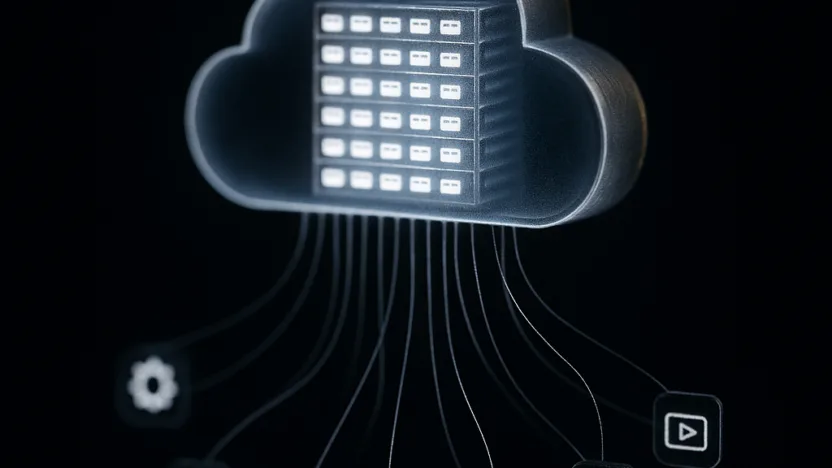
Understanding Grok Bot’s architecture requires examining what “dedicated cloud computer” actually means in implementation. Based on available documentation and reasonable inference from SpaceXAI’s infrastructure advantages (inherited from the SpaceX/xAI merger), here’s the likely technical stack:
The VM Layer
Each Grok Bot instance runs on an isolated virtual machine—likely a lightweight Linux container with a full desktop environment rather than a headless server. The VM must support:
- Browser rendering (Chrome/Chromium instance for web app interaction)
- Native application execution (for desktop software on respective platforms)
- Secure credential storage (likely hardware-backed keystores)
- Network isolation (each bot accesses only its authorized services)
The “persistent” descriptor means these VMs don’t spin down between interactions. Unlike serverless functions that cold-start on request, Grok Bot VMs maintain warm state—browser sessions stay authenticated, application contexts remain loaded, system memory preserves working data.
This architecture carries significant cost implications. A dedicated VM running 24/7 costs more than shared compute that activates on demand. The $120-300 pricing reflects real infrastructure overhead, not just margin stacking.
Interface Interaction Without APIs
The “zero API integrations required” claim represents a fundamental technical approach shift. Instead of calling documented endpoints, Grok Bot operates applications through their visual interfaces using a combination of:
Computer vision for UI element recognition: Identifying buttons, form fields, tables, and navigation elements across arbitrary web and desktop applications.
DOM parsing for web applications: Reading page structure directly rather than relying solely on visual interpretation, enabling more reliable element targeting.
Accessibility tree inspection: Leveraging the same hooks that screen readers use to understand application state and available actions.
Input simulation: Generating keyboard and mouse events that applications cannot distinguish from human interaction.
This approach trades API stability for universal compatibility. Well-designed APIs provide predictable response formats and error handling. UI automation must handle layout changes, dynamic content loading, unexpected popups, and the thousand variations in how different applications implement similar functionality.
SpaceXAI’s advantage here comes from training data scale. The Grok model family has processed vastly more examples of application interfaces than any competitor—every screenshot shared on X (Twitter), every screen recording in training datasets, every documentation site explaining how software works.
Multi-Bot Coordination
The multi-bot coordination feature suggests an orchestration layer above individual VMs. When documentation mentions bots that “work together,” the implementation likely involves:
- A message bus allowing bots to signal completion of dependent tasks
- Shared state storage for data handoff between bot instances
- A scheduler that manages execution order and resource allocation
- Error handling that propagates failures appropriately across chains
This coordination architecture resembles workflow engines like Temporal or Apache Airflow more than it resembles multi-agent AI frameworks. The difference matters: workflow engines excel at reliable execution of defined processes; multi-agent frameworks attempt emergent collaboration. SpaceXAI appears to have chosen reliability over emergence—a smart trade-off for enterprise production workloads.
Security Implications
Persistent VMs with saved credentials represent a concentrated security target. Every application your bot can access becomes a potential breach surface if the VM is compromised.
SpaceXAI’s documentation emphasizes isolation but provides limited detail on security architecture. Key questions for enterprise evaluators:
- How are credentials encrypted at rest and in transit?
- What happens to stored credentials if a subscription lapses?
- Can enterprises use their own identity providers for bot authentication?
- What audit logging exists for bot actions across applications?
- How does SpaceXAI handle compliance requirements (SOC 2, HIPAA, GDPR) for credential storage?
The enterprise waitlist likely reflects ongoing work to answer these questions satisfactorily.
The Contrarian Take: What Everyone Is Getting Wrong
Coverage of Grok Bot has focused almost exclusively on the “AI agent” framing—comparing it to OpenAI’s Operator and Anthropic’s Claude Cowork as competitors in the autonomous AI race. This framing misses the more significant strategic play.
Grok Bot is not primarily an AI agent product. It’s an infrastructure lock-in strategy.
Consider the subscription tiers: SuperGrok Heavy, Cursor Ultra, Cursor Teams Premium. These are SpaceXAI’s existing product lines. Grok Bot isn’t sold standalone—it’s an add-on that increases the stickiness of existing subscriptions.
Once your workflows depend on Grok Bot’s persistent state, switching costs become enormous. Every learned automation, every saved credential, every scheduled routine creates migration friction. The bot doesn’t just perform work; it accumulates organizational knowledge that’s impractical to transfer.
This is the Microsoft playbook from the Office/Windows era: make individual products valuable, then make them more valuable together, then make switching impossible.
The $120-300 pricing is also misunderstood. Most analysis treats these as expensive relative to AI assistant subscriptions ($20/month for ChatGPT Plus, $20/month for Claude Pro). But the correct comparison is labor cost replacement.
A virtual assistant performing basic data entry and scheduling commands $15-25/hour minimum. Eight hours monthly of such work exceeds $120 easily. SpaceXAI is pricing against human labor, not against AI chat products.
What’s overhyped: The “no API required” positioning. Yes, Grok Bot can operate applications through their interfaces. But this approach is inherently more fragile than API integration. When applications redesign their UIs—which happens constantly—bots break. When applications implement bot detection—which many will, either for security or to protect their own automation revenue—bots stop working.
API-first automation is more work upfront but more reliable over time. Interface-based automation is easier to deploy but requires ongoing maintenance as target applications evolve.
What’s underhyped: The learn-by-demonstration capability. This feature receives minimal attention in launch coverage but represents the largest long-term competitive moat.
Most automation requires explicit programming—recording macros, writing scripts, configuring workflow rules. Learn-by-demonstration inverts this: you perform a task normally, the bot observes, and it replicates the process autonomously.
The technical challenge here is immense. The bot must distinguish between essential actions and incidental ones, generalize from specific examples to variable conditions, and handle exceptions it hasn’t observed. If SpaceXAI has cracked this at production quality, competitors are 18-24 months behind.
Practical Implications: What Technical Leaders Should Actually Do
Immediate Actions (Next 30 Days)
1. Inventory your manual workflow debt. Before evaluating any agent technology, document where your team spends time on repetitive cross-application tasks. Be specific: “Updating project status in Jira, then Slack, then weekly reports” beats “project management overhead.” This inventory becomes your evaluation criteria.
2. Assess your API integration baseline. If you’ve already invested in building integrations between critical systems, Grok Bot provides less incremental value than if you’re operating in a fragmented tool environment. Organizations with mature integration layers should wait for enterprise access before evaluating; those with extensive manual processes should join the waitlist immediately.
3. Review credential management policies. Grok Bot’s architecture requires storing credentials for all automated applications. If your security policies prohibit credential sharing with third parties (even encrypted), agent adoption requires policy revision before technical evaluation.
Medium-Term Considerations (3-6 Months)
Pilot with contained workflows. Don’t start by automating your most critical processes. Select workflows where failure causes inconvenience rather than outages—internal reporting, scheduling, data cleanup. Build confidence in reliability before expanding scope.
Establish bot governance before you need it. Questions to answer now:
- Who can provision new bots?
- What applications are approved for bot access?
- How are bot actions audited?
- What’s the approval process for expanding bot permissions?
- Who owns bot maintenance when target applications change?
Budget for iteration, not installation. First-generation workflows rarely work perfectly. Allocate time for refinement, error handling additions, and edge case coverage. Teams that expect “set and forget” will be disappointed.
Architecture Considerations
If you’re building products that integrate with enterprise workflows, Grok Bot’s existence changes your competitive calculus.
API-first architectures retain value for reliability and performance, but they’re no longer the only integration path. Applications without APIs are now automatable, reducing the differentiation that API availability provided.
Bot detection becomes a strategic decision. Do you want third-party agents operating your application? If yes, consider providing “bot-friendly” modes with simplified interfaces. If no, implement detection measures—but recognize this may reduce customer value.
Your application’s visual stability affects automation reliability. Frequent UI redesigns break agent workflows. If enterprises depend on Grok Bot to operate your product, UI changes become breaking changes. This creates pressure toward slower, more conservative interface evolution.
Vendor Landscape Shifts to Monitor
OpenAI Operator: Already in market but API-dependent. Watch for an interface-first mode announcement within 90 days as a competitive response.
Anthropic Claude Cowork: Emphasizes safety constraints. Likely to position against Grok Bot on security rather than matching functionality.
Integration platforms (Zapier, Make, Tray.io): Direct competitive threat. Expect rapid feature development toward agent-like capabilities and/or pivots toward orchestration layers that work with agents rather than replacing them.
RPA vendors (UiPath, Automation Anywhere): Existing interface-based automation providers. Legacy architectures and enterprise sales cycles make rapid response difficult, but their institutional buyer relationships provide insulation.
Forward Look: Where This Leads in 6-12 Months
Prediction 1: Enterprise Pricing Will Land at $400-600/seat/month
The current $120-300 range targets individual contributors and small teams. Enterprise features—SSO integration, audit logging, compliance certifications, dedicated support—add cost. Combined with the typical enterprise margin expectations, launch pricing for companies with more than 100 seats will likely double current rates.
At $500/seat/month, the value equation shifts. That’s $6,000/year per bot—still cheaper than labor but expensive enough to require rigorous ROI justification. Adoption will concentrate in workflows where time savings exceed 5-10 hours weekly per bot.
Prediction 2: “Bot Interference” Becomes a Support Category
When multiple organizations deploy interface-based agents against the same third-party applications, conflicts emerge. Bots that expect specific page structures break when other bots’ actions trigger different application states. Rate limits designed for human users throttle bot workflows.
Application vendors will scramble to define policies: Will they ban bot access? Offer bot-specific tiers? Create stable “automation endpoints” separate from evolving user interfaces?
Support teams at SaaS companies will need new playbooks for diagnosing issues caused by agent interactions rather than direct user actions.
Prediction 3: The “Agent Operating System” Layer Consolidates
Multiple vendors cannot sustainably operate redundant persistent VM infrastructure. The economics favor consolidation.
Within 12 months, expect either:
- One or two dominant agent platforms that smaller vendors build on top of, or
- A standardized “agent hosting” infrastructure layer (from AWS, Google Cloud, or Azure) that multiple agent vendors deploy to
SpaceXAI’s head start matters, but infrastructure commoditizes. The defensible value accrues to whoever controls the behavioral layer—how bots learn workflows, how they generalize from examples, how they handle failures.
Prediction 4: Job Function Automation Outpaces Job Elimination
The persistent fear around AI agent technology is job displacement. The reality will be more nuanced.
Job functions will automate faster than jobs. A marketing coordinator who spends 30% of their time on data aggregation and 70% on creative work will lose the 30%—but gain capacity for the 70%. The job changes; it doesn’t disappear.
Organizations that approach agents as “headcount replacement” will capture less value than those treating agents as “capacity amplification.” The latter creates compound productivity gains; the former creates one-time cost savings that competitors match within quarters.
Prediction 5: Agent Security Incidents Become Headline News
Concentrated credential storage creates concentrated risk. Within 12 months, a major breach will occur—either through infrastructure compromise at SpaceXAI, a sophisticated phishing attack targeting bot credentials, or an insider threat scenario.
The first major incident will trigger immediate regulatory attention and enterprise procurement freezes. Smart early adopters will prepare now with credential rotation procedures, blast radius analysis, and incident response plans specific to agent compromise scenarios.
The Bottom Line
Grok Bot represents the clearest signal yet that the AI industry’s center of gravity is shifting from “better chat” to “autonomous execution.” The persistent VM architecture, interface-first operation model, and learn-by-demonstration capabilities combine into something genuinely new—not an incremental improvement, but a different category of tool.
The $120-300 monthly price point will seem expensive until organizations calculate the time recovery. It will seem cheap once competitors raise prices and early lock-in advantages materialize.
Technical leaders should evaluate Grok Bot through the lens of organizational workflow debt: the accumulated manual processes that exist only because no one prioritized automating them. High debt organizations will find immediate value. Low debt organizations can afford to wait for the ecosystem to mature.
Whatever your evaluation timeline, the strategic direction is clear: software that runs persistently, operates autonomously, and accumulates organizational knowledge is no longer theoretical. The question is no longer whether agents will reshape technical work, but which organizations will reshape their work around agents first.
The companies that treat AI agents as infrastructure—investing in governance, security, and integration architectures now—will outcompete those still debating whether the technology is ready for production.